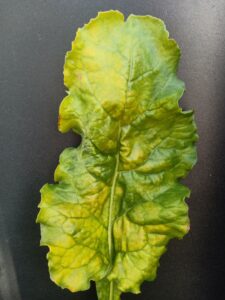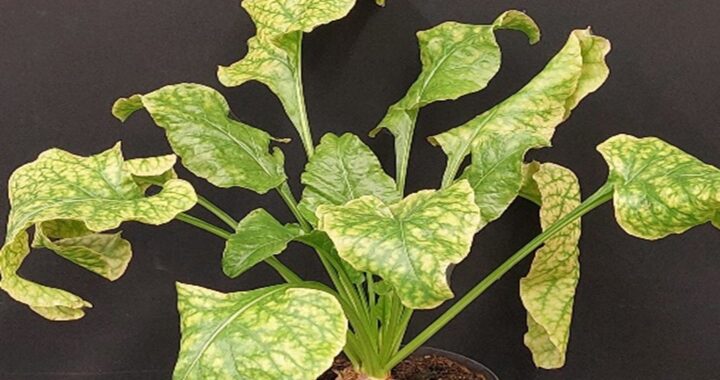
The presence of beet chlorosis virus (BChV; according to the current taxonomy, Polerovirus BCHV) has now been confirmed in the Czech Republic. BChV is a relatively recently recognised virus. In the late 1990s, studies conducted in the United Kingdom and the United States demonstrated that certain virus isolates differed biologically, serologically, and molecularly from beet mild yellowing virus (BMYV) and beet western yellows virus (BWYV). Advances in molecular diagnostics and genome sequencing subsequently enabled the International Committee on Taxonomy of Viruses (ICTV) to classify BChV as a distinct virus species.
Beet chlorosis virus is one of the major pathogens responsible for viral yellows disease in sugar beet. Other viruses associated with this disease complex include beet yellows virus (BYV), beet mild yellowing virus (BMYV), beet western yellows virus (BWYV), and, in some cases, beet mosaic virus (BtMV). These viruses are transmitted by aphids, with the green peach aphid (Myzus persicae) being the principal vector.
Under Central European conditions, BChV and BYV are considered the most economically important viral pathogens of sugar beet. Both viruses induce yellowing of the outer leaves of the rosette, while the tissue surrounding the leaf veins typically remains green. Infected leaves become brittle and break easily. However, symptom expression differs between the two viruses: BYV usually causes a bright lemon-yellow discoloration, whereas BChV produces a more ochre to orange-yellow appearance. BChV infections are also frequently associated with diffuse reddish or purplish patches on the leaves. Both viruses reduce yield and sugar quality, with disease severity largely depending on the timing of infection.
To detect and molecularly characterise Czech isolates of beet chlorosis virus, infected sugar beet leaves were collected from several locations across the Czech Republic. Viral genomes were analysed using high-throughput sequencing (HTS), and the resulting sequences were compared with isolates reported from other countries. The study also generated a near-complete genome sequence of a Czech BChV isolate. These findings improve our understanding of the evolution and geographical spread of beet chlorosis virus and provide an important foundation for future monitoring and surveillance of viral diseases affecting sugar beet.
Further details are available in the scientific publication:
Ibrahim E., Pasha A., Ziebell H., Maňasová M., Ryšánek P., Kundu J.K. (2026). Detection and molecular characterisation of beet chlorosis virus in sugar beet in the Czech Republic. Annals of Applied Biology, 189(1), e70139. DOI: 10.1111/aab.70139.